Sister Midnight (2025)
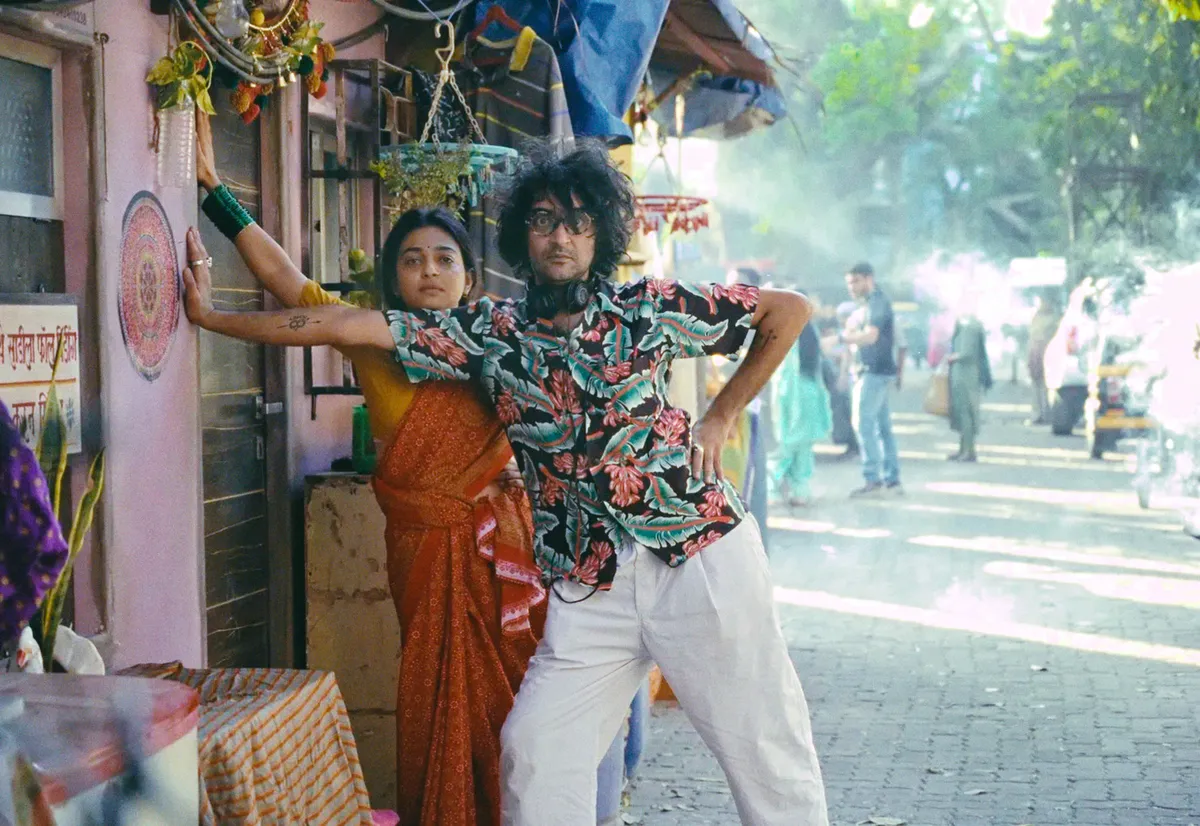
I dread the word “literally.” It once carried weight, but now it’s hollow noise. People toss it around when they can’t be bothered to articulate what they truly mean. Yet, thirty minutes in, I was literally bored.
Just to be clear, this isn’t some deep, existential boredom. It’s the kind you get when you see potential gather dust. Still, I didn’t want to bail because I recognized the considerable effort invested in its making, and the audiovisual aspect is as important to me as the story. This is far from careless filmmaking.
So, I went back in, but this time I had gathered some reconnaissance on the director. Perhaps understanding his perspective would reveal new insights or cause a shift in my perception. Or, it might not.
Director's Statement
In the film's press kit1, writer and director Karan Kandhari offers the following excerpts:
I’m not interested in Society’s notion of of ‘heroism’. This is a story about a misfit who becomes an accidental outlaw. An Outlaw challenges society’s norms and conventions. They do so either consciously or unconsciously, by way of purpose or circumstance, informed by either intellect or intuition.
My character is informed by her intuition, as am I as an artist. Emphasis is on the word ‘accidental’. Uma becomes an outlaw by circumstance and necessity, unconsciously. Late in the film she is ‘branded’ by the criss-cross bandage on her nose. She looks like a ‘character’ as this transforms her new appearance. She is a survivor...she looks pretty bad ass, like she could confront an army. But she got this ‘battle scar’ by tripping and falling flat on her face. She’s an outlaw because she’s a misfit. There is no manual for life, the film spun out from this seed of a notion. Life is a process.
I understand the intention behind calling her an “accidental” outlaw, but when you throw in “circumstance”, “necessity”, all that... the words start to lose their edges. Everything gets a little hazy. In multiple interviews, Kandhari echoes the phrase “a misfit who became an accidental outlaw” as if it were the film’s defining tagline.
I do not wish to judge his worldview based on press notes, as these materials might just be a required addition for a state-funded project. However, even as press material, the statement reflects an authorial position that he, as the director, has chosen to make public and that cannot be dismissed.
Maybe it works on paper. Maybe. But when it tries to live, it folds in on itself. The irony is that the more I learned about the director, the quicker I drifted away. The second time around, I barely made it fifteen minutes before my hands, almost on autopilot, reached for the remote.
I keep waiting for the story to tell me what it wants, but I don’t think it knows. I don’t think I do either. I keep asking: Is this about the ennui of an arranged marriage? A sexless union? Adapting to the gears of the metropolis? Or is it supposed to be about female liberation? After all, nothing screams irony quite like a man defining freedom for women.
He is sorta boring. She is kinda douche.
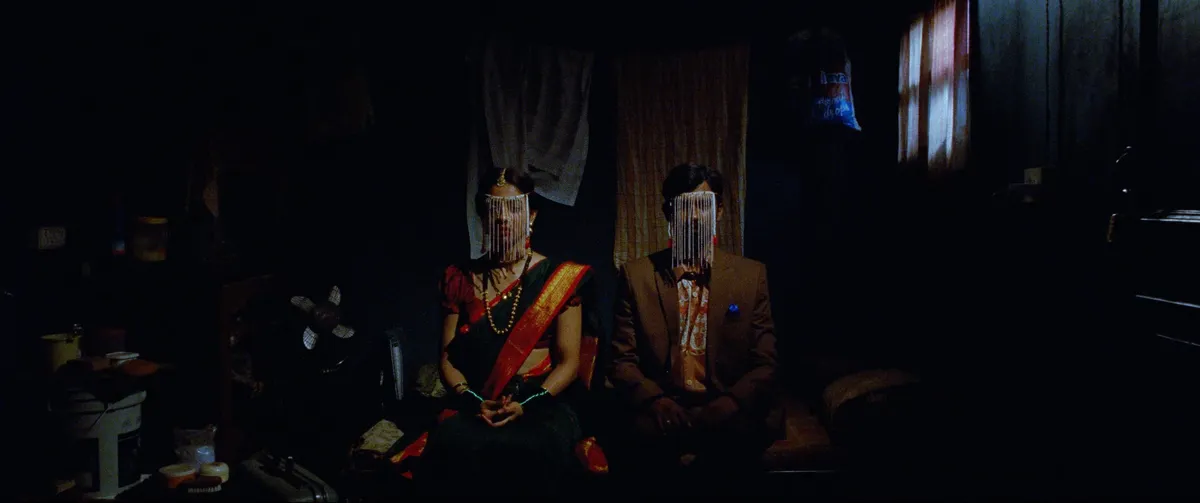
The film opens with Uma and Gopal, newlyweds bound by an arranged marriage. Gopal isn’t fighting it. He just sort of... exists. He works, wants to support, and tries to be useful. Though unspoken, if Uma chose to leave, he would let her go without the need to deliver a dramatic "வாழ்க்கை வானத்திலே புதிய பறவையாய்..." monologue.
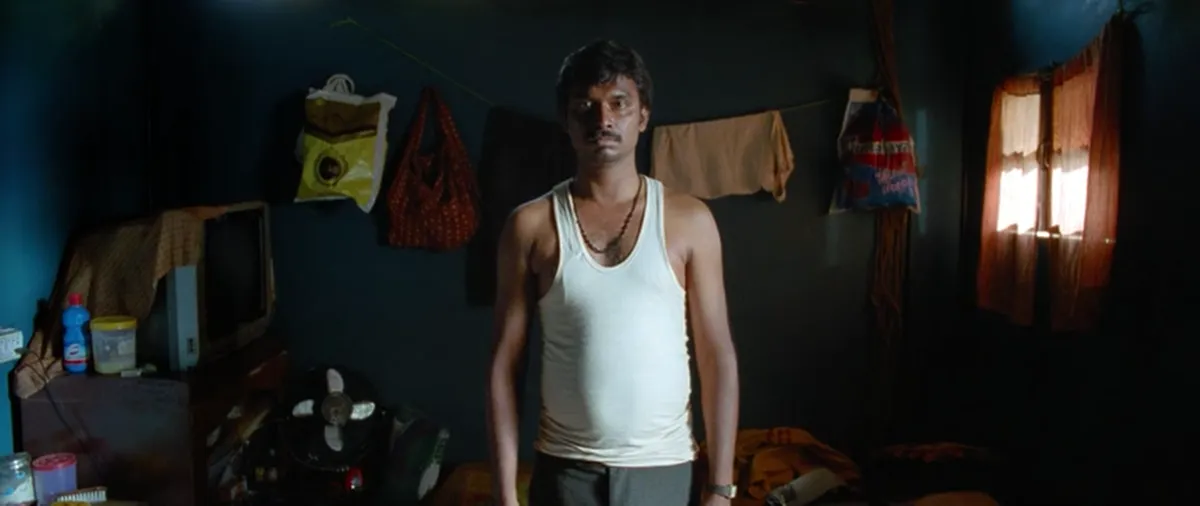
Essentially, he is a living palimpsest of Chandru from Mouna Ragam — without the streamline moderne art-deco bungalow, without the circular atrium on the terrace, without the Premier Padmini, and without the shikibutons either. Just the two of them, orbiting each other in their mutual sorrow.
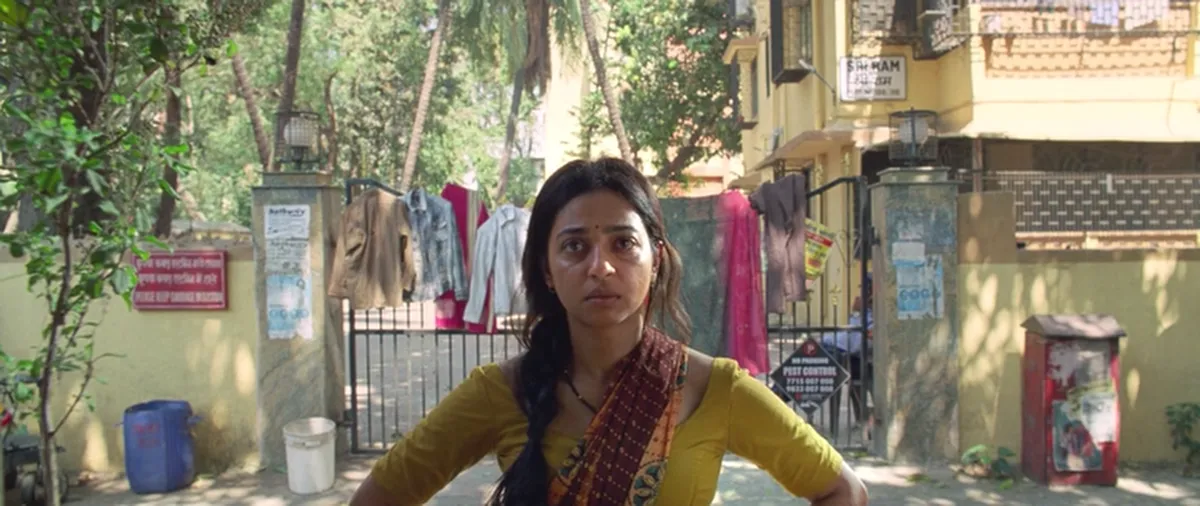
Uma is quite the opposite. She embodies the spirit of that Apple ad where Steve Jobs honors the crazy ones, the misfits, the square pegs. But unlike those mavericks, whose non-conformity were badges of honor, Uma can’t chop a courgette or pour flour without turning the kitchen into a blizzard. When their marital quarrels reach a peak, she simply calls him motherfucker. Swapping curses instead of arguments. That’s what defiance looks like, I suppose.
I keep circling around the word 'defiance' almost to an accusatory degree, but that’s not my intent. I like these two. I like the world they’re stuck in. I like that there’s nothing sparking between them. I can see the outlines, the scaffolding, the half-built anatomy, the bones, the muscles, of who they’re supposed to be, but Kandhari never really bothers to stitch it all together, nor steps inside the skin. She’s meant to be a badass, but he didn't bother to give her a brain.
Observed, Not Understood
“Men are dim. Just throw in enough chili and salt and they'll eat anything.”
“I'm tainted goods. I'm a dee-vor-cee. I'll wear this like a badge and go forth to the hills, form a manless nation and build a monolithic altar to the pussy.”
This is the level of dialogue the film operates on. I chuckle at these lines, not because they are clever, but because they have no meaning. It confuses the performance of defiance with its substance and then praises itself for being brave.
Maybe it’s just me, but whenever a male director sets out to make a film that engages with themes of female emancipation and transformation — to borrow a line from Tyler Durden — I instinctively brace for impact, calm as a Hindu cow awaiting a sermon. What troubles me is not their ideological hostility but the narrowness of their thinking.
Most of us remain strangers to ourselves. From that view, how can anyone claim to fully unravel the inner metaphysics of someone shaped by a different gendered experience? This is a difficult claim, especially while standing in the fog of our own design. Even after trying, the understanding remains partial at best.
I’ll never fully feel what it’s like to walk alone at night with danger humming in the background. It comes from years of warnings to watch your back, clutch your keys like a weapon, and cross the street when footsteps follow close behind. That’s not my world. Just as no woman can fully feel the pressure of having to ask someone out, to act confident, to swallow rejection, and to pretend it doesn’t cut deep.
It’s a modest example but reflects a broader pattern. The systems shaping us at home and the structures governing us embed these preconceptions deeply. The gap between men and women remains unbridgeable. I cannot fully become the other, but that does not absolve me from trying to understand.
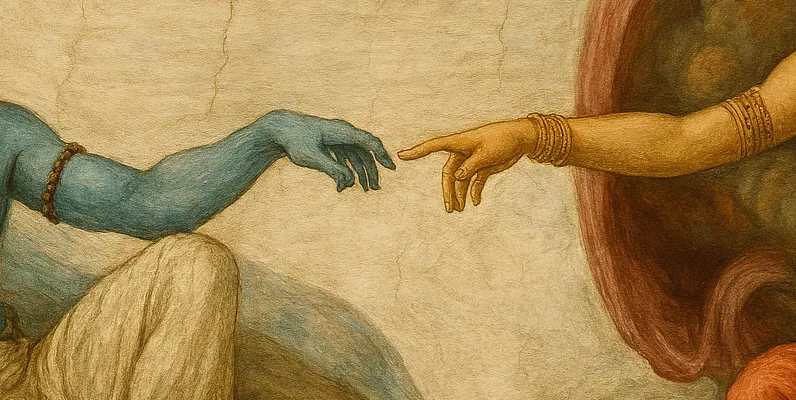
A director committed to understanding this gap leans into it, stretching toward it like Michelangelo’s Creation of Adam, fingertips nearly touching. In that reach, the contradictions, frustrations, humor, anger, and messiness of the human condition gain depth and meaning. The effort may be imperfect, but it counts. Grounded in that reality, the filmmaker can mock, provoke, or satirize any subject freely.
By contrast, Kandhari makes no real effort to reach out. Uma is tough because he says so. The dynamic slips into petty tit for tat, causing satire to collapse into caricature. Liberation hardens into aggression, empowerment twists into domination, and freedom becomes a mirror of the worst in men.
I believe Kandhari is sincere in describing a misfit rebel at the story's center and conveying defiance. I do not doubt his intention. Yet the incongruence between his aim and the film’s effect makes it feel unconvincing.
As I sit with these thoughts...
Lately, I've noticed a clear pattern of risk avoidance among new dirtcore directors. It seems they are unwilling to fully commit to their story or stylistic choices. In that context, the notion of an “outlaw” becomes a paradox. What does it mean to challenge norms when there is nothing left to challenge?
For someone who professes to reject social norms and follow intuition, I find Kandhari's conformity almost comical. Truth is, I like weird people. I like how their metaphysics twist and sprawl. There’s something poetic in the perversity of their psychic terrain. I’m drawn to the fuckedupness. But weird just for the sake of weird? That’s just static.
I also question how he perceives the bond in a between a man and a woman, specifically within a marriage. What did he observe and whom did he watch? Which model of intimacy does he reflect? Perhaps the more compelling question what escaped his view. What was absent?
Maybe this sums up Kandhari’s patchwork of borrowed inspirations. His pastiches draw from all corners: Uma’s quizzical, dumbfounded expressions, which he says echo Buster Keaton, though Keaton was always precise and never dull. Cambodian rock rhythms. Southern blues. A nod to Taxi Driver’s iconic poster. Wes Anderson’s entire toy box. Even a hint of Kurosawa.
His inspirations span the world. His work brims with passion and rich language, but the story’s core, rooted in his own soil, never fully speaks.
Thanks for reading,
V.
Magnolia Pictures, Press Kit for Sister Midnight, accessed September 29, 2025, https://www.magnoliapictures.com/sister-midnight-press-kit.↩